
Policy continuity, legitimacy, and accountability signals across internet governance institutions.

Governance
Governance
Governance intelligence tracks the institutions, policy processes, standards bodies, registry operations, accountability disputes, and operator communities that shape how the internet is governed and kept operational. This page connects RIR Watchdog, Case File, Number Resource Society, ICANN, IETF, internet history, and network operator group coverage into a research path with public evidence, affected institutions, regional exposure, implementation risk, continuity concerns, and legitimacy questions. Readers can compare which governance signals are procedural updates, which ones may change allocation policy, standards practice, registry accountability, routing communities, or institutional trust, and which public sources support continued monitoring. The page is written for operators, policy readers, registry communities, investors, and infrastructure customers who need more than a list of governance articles: it explains the actors involved, the decision points under pressure, the operational consequences that may follow, and the questions that deserve follow-up as public evidence develops.
RIR WatchdogCase FileNumber Resource SocietyICANNIETFHistory of InternetNOGs
RIR Watchdog, Case File, NRS, ICANN, IETF, History of Internet, and NOG sessions.
Coverage prioritizes implementation evidence and institutional behavior over declarative positions.
Session Map
Governance Branch
RIR Watchdog
Five regional sessions tracking allocation policy, board legitimacy, and institutional continuity.
Open RIR WatchdogCase File
Long-cycle governance dossiers with legal, election, and institutional stress analysis.
Open Case FileNumber Resource Society
Membership, charter, and resource-governance intelligence from the NRS ecosystem.
Open NRS SessionICANN
DNS coordination, accountability frameworks, and global multi-stakeholder process dynamics.
Open ICANN SessionIETF
Protocol standardization trajectory and interoperability risk under fragmented policy conditions.
Open IETF SessionHistory of Internet
Long-cycle infrastructure history used for governance interpretation and structural forecasting.
Open History SessionNOGs
Operator-level implementation intelligence from APRICOT plus regional and national NOG ecosystems.
Open NOGs SessionLatest Coverage
Governance Headlines
1,864 articles

Investing in IP addresses: Risks, rewards, and unresolved questions
IP address investing offers returns driven by scarcity, but policy shifts and IPv6 adoption raise long-term risks.

How much do regional internet registries really cost and who pays?
An examination of Regional Internet Registries’ cost structures and the debate over compulsory fees versus core technical functions.

How much is an IPv4 address worth in 2026
How much IPv4 addresses are worth in 2026, with market pricing, leasing dynamics and structural scarcity shaping digital capital value.
The long road to IPv4 exhaustion
A factual look at how IPv4 exhaustion unfolded and reshaped internet governance worldwide over three decades.

How to value an IPv4 address block for a business audit
How businesses can calculate fair value for IPv4 blocks during audits, covering ownership proof, market pricing, risk and sustainability.

US removes spyware-linked executives from sanctions list, stoking debate on cybersecurity oversight
US Treasury removes sanctions on three executives tied to spyware consortium Intellexa, prompting debate on policy and oversight.

AFRINIC
Why RIRs don’t have power to enforce internet address policies
RIRs play a key role in IP address allocation but lack enforcement power, raising governance questions amid disputes like the AFRINIC case.

LARUS to exhibit at PTC’26 as global connectivity event returns to Hawaii
Larus will participate in PTC’26, the global connectivity event in Hawai‘i, showcasing their IPv4 solutions and network infrastructure.
Trump to seek Musk’s help to restore internet access in Iran
Trump plans to consult Elon Musk on using Starlink to restore Iran’s internet amid widespread protest and government blackout.
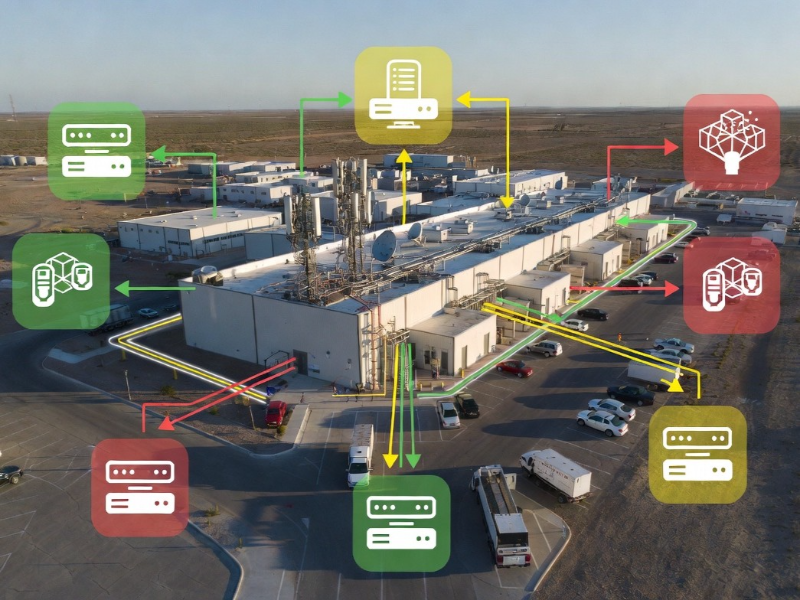
Iraq’s DE-CIX-powered internet exchange boosts regional connectivity
IRAQ-IXP growth to nearly 30 networks and rising traffic highlights Iraq’s emergence as a regional digital hub with lower latency access.

Apple tops global smartphone market in 2025 with 20 % share, Counterpoint says
Apple led the global smartphone market in 2025 with a 20 % share as shipments grew 2 %, but industry headwinds may slow growth in 2026.

Vodafone idea secures AGR relief, agrees to pay ₹124 crore annually over six years
Vodafone Idea’s AGR liabilities are frozen with reduced annual payouts, helping stability now while structural.

AFRINIC
Why most ISPs miss massive revenue opportunities from IPv4
Exploring structural, policy and organisational barriers that prevent ISPs from capturing IPv4 revenue opportunities.

How IPv4 scarcity is driving IP prices through the roof
IPv4 scarcity and fixed supply have pushed IP address prices up, turning technical resources into valuable digital assets worldwide.

Understanding IP addresses and why they are important
Discover what IP addresses are, the difference between IPv4 and IPv6, and their importance in internet communication.

AFRINIC
Simple Ip strategies that can multiply ISP revenue over time
An in-depth analysis of how internet service providers use intellectual property strategies to unlock long-term revenue growth.

Ofcom insists sharing is caring when it comes to upper 6 GHz
Ofcom reaffirms support for flexible upper 6 GHz spectrum access to spur innovation and safeguard existing services.

India proposes new smartphone security rules
India proposes draft rules for smartphone security that would require source code access and other software measures amid industry pushback.

Who is Lu Heng? LARUS CEO and internet entrepreneur who wants to decentralise
Lu Heng is a key figure in global internet governance, challenging traditional systems and pushing reform in IPv4 resource management.

How ISPs can unlock hidden revenue streams through IP address monetization
IPv4 scarcity is creating new financial opportunities. Discover how ISPs can monetise unused IP addresses and unlock hidden revenue.