
Policy continuity, legitimacy, and accountability signals across internet governance institutions.

Governance
Governance
Governance intelligence tracks the institutions, policy processes, standards bodies, registry operations, accountability disputes, and operator communities that shape how the internet is governed and kept operational. This page connects RIR Watchdog, Case File, Number Resource Society, ICANN, IETF, internet history, and network operator group coverage into a research path with public evidence, affected institutions, regional exposure, implementation risk, continuity concerns, and legitimacy questions. Readers can compare which governance signals are procedural updates, which ones may change allocation policy, standards practice, registry accountability, routing communities, or institutional trust, and which public sources support continued monitoring. The page is written for operators, policy readers, registry communities, investors, and infrastructure customers who need more than a list of governance articles: it explains the actors involved, the decision points under pressure, the operational consequences that may follow, and the questions that deserve follow-up as public evidence develops.
RIR WatchdogCase FileNumber Resource SocietyICANNIETFHistory of InternetNOGs
RIR Watchdog, Case File, NRS, ICANN, IETF, History of Internet, and NOG sessions.
Coverage prioritizes implementation evidence and institutional behavior over declarative positions.
Session Map
Governance Branch
RIR Watchdog
Five regional sessions tracking allocation policy, board legitimacy, and institutional continuity.
Open RIR WatchdogCase File
Long-cycle governance dossiers with legal, election, and institutional stress analysis.
Open Case FileNumber Resource Society
Membership, charter, and resource-governance intelligence from the NRS ecosystem.
Open NRS SessionICANN
DNS coordination, accountability frameworks, and global multi-stakeholder process dynamics.
Open ICANN SessionIETF
Protocol standardization trajectory and interoperability risk under fragmented policy conditions.
Open IETF SessionHistory of Internet
Long-cycle infrastructure history used for governance interpretation and structural forecasting.
Open History SessionNOGs
Operator-level implementation intelligence from APRICOT plus regional and national NOG ecosystems.
Open NOGs SessionLatest Coverage
Governance Headlines
1,864 articles

The future of IP addresses as a recognised asset class
How IPv4 scarcity and secondary markets are turning IP addresses into recognised digital capital in the modern internet economy.

History of Internet
Brian Carpenter: Today’s internet no longer recognizable
Internet pioneer Brian Carpenter reflects on early collaboration, governance lessons and today’s struggle for regional autonomy online.

Spanish Telcos explore shared mobile network
Spanish telcos explore a mobile network joint venture to improve capital efficiency and reduce costs in a challenging telecom environment.

IPv4 scarcity and its economic impact on ISPs
How IPv4 address exhaustion is reshaping ISP business models and network investment amid slow IPv6 adoption and premium address pricing.

Does IPv6 have capital value?
Exploring how IPv6’s virtually infinite address space affects economic value compared with IPv4’s tradable scarcity-driven assets.

History of Internet
Amazon plans thousands more corporate job cuts amid restructuring
Amazon plans another round of corporate job cuts next week to streamline operations and reshape its white‑collar workforce.
Microsoft 365 services disrupted users
Microsoft 365 services experienced a major outage for thousands of users, highlighting risks of cloud reliance and online service continuity.

CityFibre expands full‑fiber availability for small businesses
CityFibre expands FTTP broadband to 4.5 million small businesses and home workers, emphasising fibre’s role in UK digital competitiveness.

CK Hutchison considers dual listing for global telecom assets
CK Hutchison is weighing a dual London and Hong Kong listing for its global telecom assets, signalling strategic sector repositioning.

US IT Hardware Stocks Slide as Morgan Stanley Turns Cautious
U.S. IT hardware stocks slid after Morgan Stanley took a more cautious view, citing weak corporate spending and rising costs.

AI demand squeezes traditional consumer hardware cost space
AI demand for memory chips is tightening supply and raising costs for consumer hardware, reshaping the market for phones and PCs.

History of Internet
Netflix CEOs are on the back foot defending $83bn Warner Bros. bid
Netflix defends an $83bn bid for Warner Bros Discovery amid investor skepticism and competitive pressure, raising key questions.

Iran signals shift from full internet shutdown to more targeted online control
Iran shifts from full internet blackout to targeted access amid unrest, raising concerns over digital control and censorship.

Enterprise‑grade agentic AI moves from concept to large‑scale deployment
IBM and E& unveil enterprise‑grade agentic AI for governance and compliance, showing AI’s shift from concept to large‑scale operational use.
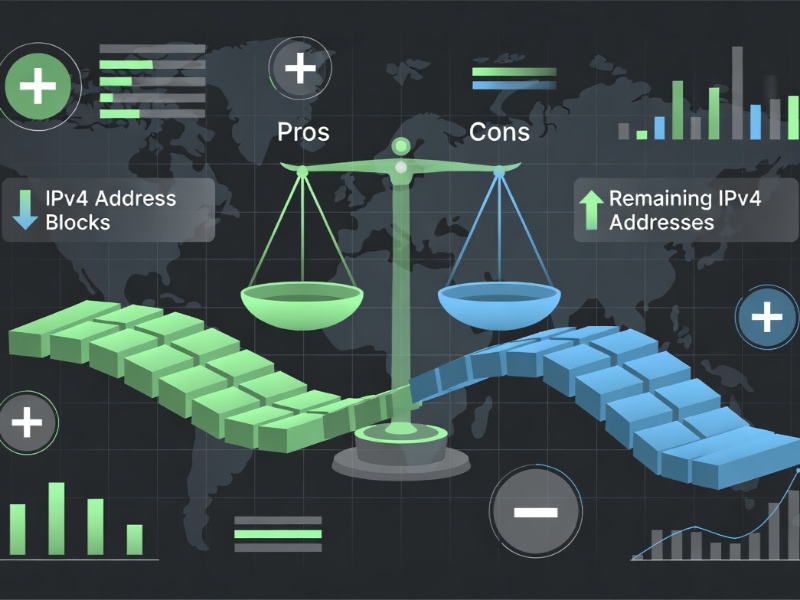
The pros and cons of IP address monetization platforms
IPv4 monetization platforms ease access and flexibility under scarcity but create ongoing financial and reputation risks for entities.

The impact of IPv4 scarcity on small business growth
IPv4 scarcity raises costs and barriers for small businesses, constraining digital growth and reinforcing competitive imbalances.

IP Capital: How to lease unused IP address blocks for revenue
A practical guide to leasing unused IPv4 address blocks and generating recurring income from surplus resources.

India proposes smartphone source code access for security rules
Proposed Indian mobile security rules could force source code access and software change alerts from Apple, Samsung and others.

Why IPv4 prices keep rising even as IPv6 adoption gathers pace
IPv4 address prices continue rising even with IPv6 growth, reflecting scarcity, market demand and digital capital dynamics.

The role of IPv4 brokers in the digital economy
IPv4 brokers stabilise a scarce Internet resource, enabling transfers and leasing without resolving underlying structural limits.