
Policy continuity, legitimacy, and accountability signals across internet governance institutions.

Governance
Governance
Governance intelligence tracks the institutions, policy processes, standards bodies, registry operations, accountability disputes, and operator communities that shape how the internet is governed and kept operational. This page connects RIR Watchdog, Case File, Number Resource Society, ICANN, IETF, internet history, and network operator group coverage into a research path with public evidence, affected institutions, regional exposure, implementation risk, continuity concerns, and legitimacy questions. Readers can compare which governance signals are procedural updates, which ones may change allocation policy, standards practice, registry accountability, routing communities, or institutional trust, and which public sources support continued monitoring. The page is written for operators, policy readers, registry communities, investors, and infrastructure customers who need more than a list of governance articles: it explains the actors involved, the decision points under pressure, the operational consequences that may follow, and the questions that deserve follow-up as public evidence develops.
RIR WatchdogCase FileNumber Resource SocietyICANNIETFHistory of InternetNOGs
RIR Watchdog, Case File, NRS, ICANN, IETF, History of Internet, and NOG sessions.
Coverage prioritizes implementation evidence and institutional behavior over declarative positions.
Session Map
Governance Branch
RIR Watchdog
Five regional sessions tracking allocation policy, board legitimacy, and institutional continuity.
Open RIR WatchdogCase File
Long-cycle governance dossiers with legal, election, and institutional stress analysis.
Open Case FileNumber Resource Society
Membership, charter, and resource-governance intelligence from the NRS ecosystem.
Open NRS SessionICANN
DNS coordination, accountability frameworks, and global multi-stakeholder process dynamics.
Open ICANN SessionIETF
Protocol standardization trajectory and interoperability risk under fragmented policy conditions.
Open IETF SessionHistory of Internet
Long-cycle infrastructure history used for governance interpretation and structural forecasting.
Open History SessionNOGs
Operator-level implementation intelligence from APRICOT plus regional and national NOG ecosystems.
Open NOGs SessionLatest Coverage
Governance Headlines
1,864 articles
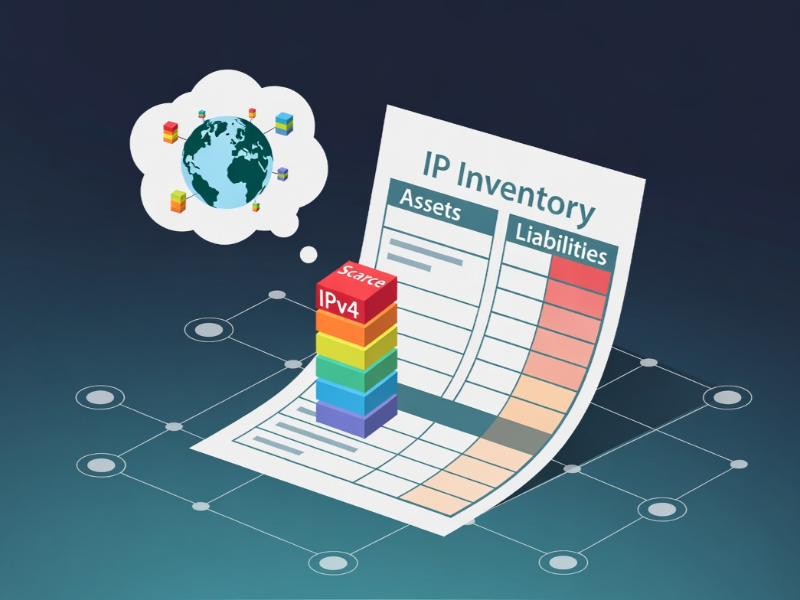
Why CFOs, not just CTOs, should care about their IP inventory
Why CFOs must treat IPv4 addresses as balance sheet assets and consider leasing versus ownership in financial strategy.

China presses Netherlands over Nexperia chip dispute
China urges the Netherlands to correct its actions on Nexperia, saying Dutch intervention has disrupted the global semiconductor supply chain.

Samsung Electronics touts HBM4 progress as memory market competition intensifies
Samsung Electronics reports progress on HBM4 memory chips as competition in the high-bandwidth memory market intensifies in 2026.

How IP leasing quietly reshapes the economics of the Internet
IPv4 leasing is not innovation but adaptation, revealing how scarcity reshapes incentives in the Internet’s core systems.
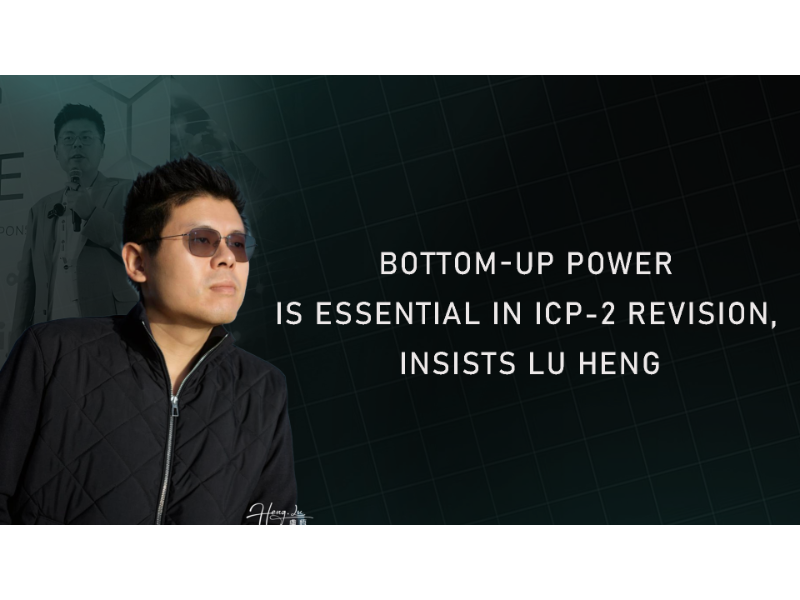
Bottom-up power is essential in ICP-2 revision, insists Lu Heng
Lu Heng explains why ICP-2 revision must preserve bottom-up governance to ensure RIR accountability and resist centralised control.

AFRINIC
How CAIGA fits into Smart Africa’s digital transformation agenda
Critics warn CAIGA is less about digital transformation and more about political control, raising concerns over Smart Africa and ICANN’s role.

Debate over decentralising global IP address registration
Proposal explores using distributed ledgers to decentralise global IP address registration, raising governance and regulatory questions.

AFRINIC
AFRINIC governance under scrutiny as community ownership claims are questioned
AFRINIC faces governance scrutiny as critics question whether community ownership truly reflects broad participation.

Potanin’s catalytic people takes 25% stake in selectel cloud provider
Russian billionaire Vladimir Potanin’s Catalytic People buys 25 % of Selectel as Russia pushes domestic cloud and AI development.

Internet governance debate: Why registries must not become enforcers
A new governance debate highlights concerns that giving registries enforcement powers may threaten neutrality and global internet stability.

Coupang founder apologises over data leak, pledges compensation
Coupang’s founder Kim Bom apologises after a data breach exposed customer information and pledges compensation and stronger security.

AFRINIC
CAIGA risks reproducing centralised power as Africa confronts ICANN’s governance overreach
CAIGA is promoted as reform, but critics warn it may deepen ICANN’s control over Africa’s internet governance.

Calls grow for overhaul of internet governance amid centralisation concerns
As global internet governance comes under scrutiny, experts highlight risks of centralised control and advocate structural change.

Data sovereignty’s practical reality: Why law matters more than localisation
Lu Heng argues data sovereignty cannot be achieved by technical localisation alone; legal frameworks and interoperability are essential.

US postpones China chip tariffs to 2027, seeking trade peace while raising stakes
New US tariffs targeting Chinese legacy chips are postponed until 2027, drawing sharp criticism from Beijing and industry watchers.

WhatsApp says Russia restrictions threaten private messaging for millions
WhatsApp has criticised restrictions in Russia after reported slowdowns, warning that limits could affect encrypted messaging for millions.

IP address market under scrutiny: Critics call purchases a ‘scam’ and hint at trillion-dollar telecom potential
Critics say buying IPv4 addresses is a lease, not true ownership, raising questions about governance and trillions in telecom asset value.

Portability of internet number resources: Why ICP-2 revision must guarantee mobility
Lu Heng outlines why mandatory portability of number resources in the ICP-2 revision is essential for resilience and network autonomy.
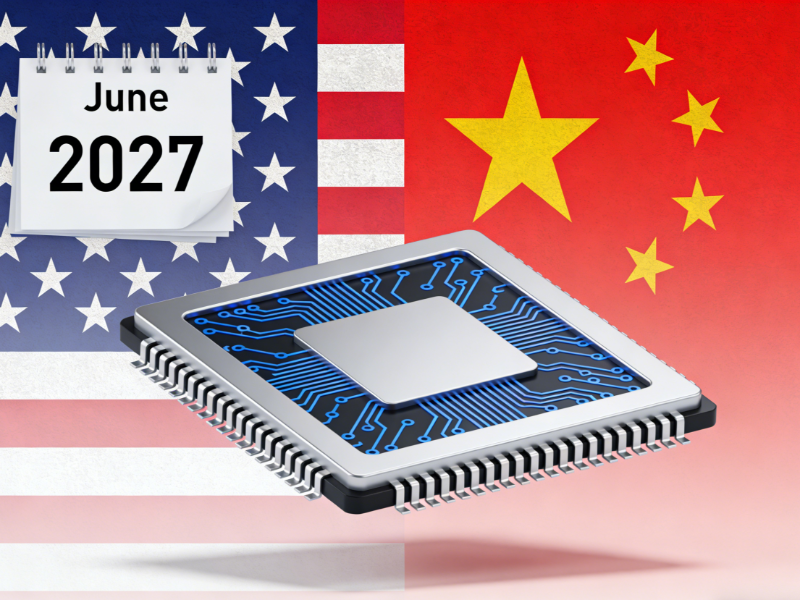
US delays chip tariffs on China until 2027 amid trade truce
Washington postpones new China chip tariffs to mid-2027 while addressing broader trade and supply-chain tensions.

US delays additional tariffs on Chinese chips until June 2027
The US has delayed additional tariffs on Chinese semiconductor imports until June 2027, easing short term pressure on chip supply chains.