
Single-stack monitoring for RIR governance continuity.
Governance / RIR Watchdog
RIR Watchdog Intelligence Briefing Profile
RIR Watchdog intelligence follows the five regional internet registries as institutions that allocate number resources, maintain policy processes, run elections, interpret transfer rules, and preserve operational continuity for internet infrastructure communities. The page connects AFRINIC, APNIC, ARIN, LACNIC, and RIPE NCC coverage with public documents, election signals, governance disputes, court or accountability proceedings, policy implementation, membership pressure, and continuity risk so readers can see where registry legitimacy is stable and where it is contested. Operators, resource holders, policy readers, investors, and governance readers can compare registry behaviour across regions, understand which claims are supported by public evidence, and identify developments that could affect allocation confidence, community trust, transfer markets, compliance posture, or the reliability of resource-governance institutions.
ARINRIPE NCCAPNICAFRINICLACNIC
Institution legitimacy and policy execution quality.
Decision-critical policy and control changes.
Primary-source reporting plus structural interpretation.
Member Unlock
Restricted Profile Intelligence
Login is required to unlock full profile briefings and deep-dive sections.
Strategy Circle Briefing
Join to unlock strategic briefings after signing in.
Join Strategic CircleLeadership Alliance Briefing
For qualified IP-asset owners and management; sign in to unlock alliance briefings.
Join Leadership AllianceRegistry Nodes
- 5 Active Regions
- Single-stack monitoring for RIR governance continuity.
Primary Domain
- Governance
- Institution legitimacy and policy execution quality.
Core Topics
- Elections / ICP-2 / Transfer Policy
- Decision-critical policy and control changes.
Output Mode
- Intelligence Briefing
- Primary-source reporting plus structural interpretation.
Session Map
Registry Sessions
ARIN
North America governance, transfer-market behavior, and member process monitoring.
Open ARINRIPE NCC
Accountability, member visibility, and implementation signals across the RIPE NCC region.
Open RIPE NCCAPNIC
Allocation pressure, policy adaptation, and Asia Pacific institutional execution.
Open APNICAFRINIC
Election process, legal continuity, and board legitimacy under institutional stress.
Open AFRINICLACNIC
Institutional adaptation and ICP-2 governance trajectory in Latin America.
Open LACNICLatest Coverage
RIR Watchdog Headlines
477 articles
AFRINIC
Could AFRINIC elections be challenged under international arbitration law?
AFRINIC’s disputed elections face international arbitration challenges, raising questions on governance, legitimacy, and regional autonomy.
AFRINIC
The hidden cost of AFRINIC elections: Who pays for governance?
AFRINIC’s 2025 elections reveal hidden costs of governance, including legal disputes, procedural delays, and financial burdens.

AFRINIC
Startups and AFRINIC elections: Africa’s digital future
Structural barriers keep African startups from voting in AFRINIC elections, weakening representation and leaving governance to legacy actors.

AFRINIC
Decentralization vs. centralization in AFRINIC’s electoral model
AFRINIC’s electoral crisis shows how decentralised member control can be undermined by unconstitutional state interference.
AFRINIC
Why AFRINIC’s election security needs stronger legal guarantees in Mauritius
Mauritius annulled AFRINIC’s June vote and staged a September rerun, a process which is lacking legal legitimacy.
AFRINIC
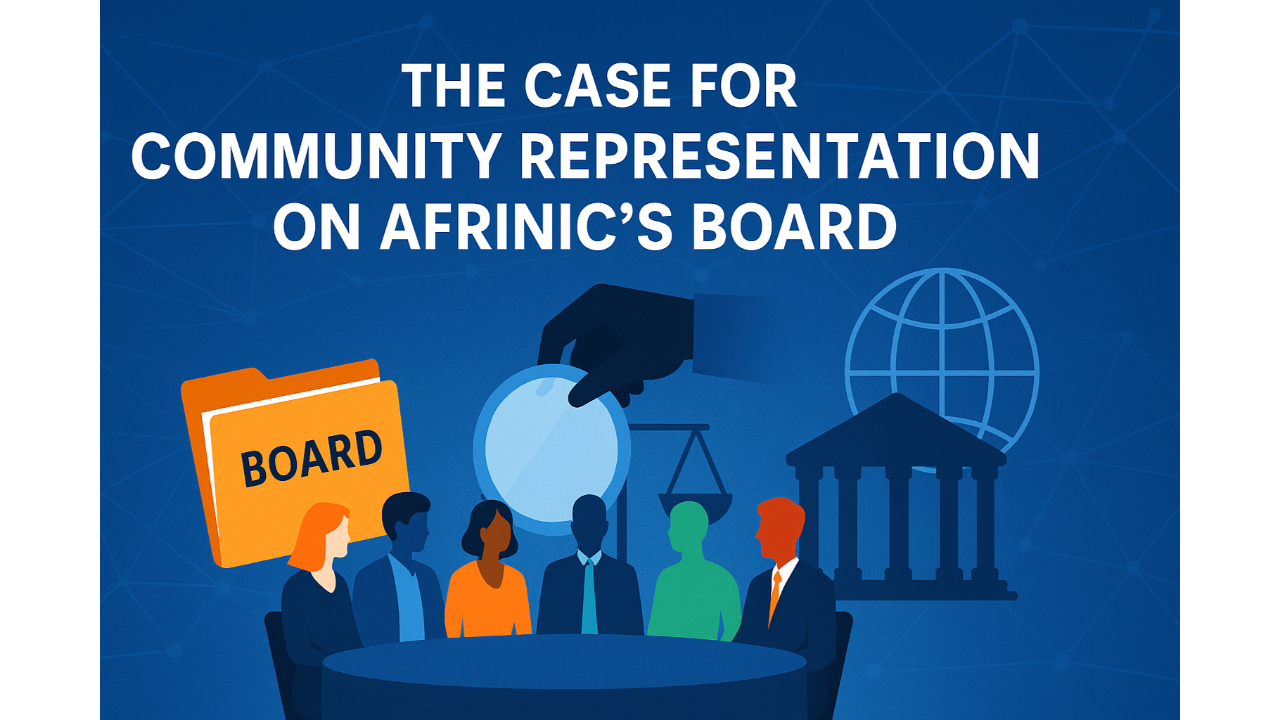
The case for community representation on AFRINIC’s Board
AFRINIC’s September 2025 elections broke bylaws, stripped members’ rights, and deepened fears of capture in Africa’s internet governance.

AFRINIC
AFRINIC’s elections in global perspective
AFRINIC’s election disputes highlight the need for clear processes to maintain Africa’s internet governance credibility.

AFRINIC
AFRINIC elections and policy decisions: Why they shape Africa’s internet future
AFRINIC’s disputed elections are more than a governance issue—they shape the policies that decide Africa’s digital future. Without transparent, accountable processes, critical decisions on IP resource allocation and connectivity risk being captured by elites instead of the…

AFRINIC
How AFRINIC board elections affect IPv4 and IPv6 allocation in Africa
The governance crisis at AFRINIC is directly impacting IP resource management in Africa, with implications for IPv4 and IPv6 allocation.

AFRINIC
AFRINIC elections and policy development
AFRINIC’s policy process suffers as election legitimacy fails; procedural reform is essential for progress.
AFRINIC
How AFRINIC can rebuild confidence after election dispute
AFRINIC must follow law, recognise June election, and resist government interference to regain African community trust.

AFRINIC
Who controls the internet in Africa? The AFRINIC vs. Cloud Innovation case explained
The AFRINIC–Cloud Innovation legal battle underscores Africa’s struggle to maintain regional internet governance amid institutional collapse.
AFRINIC
How AFRINIC election issues affect African ISPs and startups
AFRINIC election disputes put African ISPs and startups at risk. Delays in IP allocation, weak trust, and unstable governance.
AFRINIC
Why AFRINIC’s election legitimacy matters for internet governance globally
AFRINIC’s election legitimacy raise concerns about transparency in internet governance, with implications for Africa and global trust.
AFRINIC
How AFRINIC’s electoral future relies on stronger constitutional safeguards
AFRINIC’s June and September 2025 election failures highlight the urgent need for stronger constitutional safeguards.

AFRINIC
AFRINIC elections and the consequences of weak legal remedies in Mauritius
Mauritius’ AFRINIC election annulment shows how weak legal safeguards invite state capture and foreign interference.

AFRINIC
AFRINIC elections and the importance of judicial independence in Mauritius
Mauritius’ legal uncertainty endangers AFRINIC elections; judicial independence needed to restore community-led governance.
AFRINIC
AFRINIC elections in the shadow of Mauritius’ political polarization
Mauritius’ political polarization affects AFRINIC elections, with legal disputes and contested rules risking trust and fairness.

AFRINIC
AFRINIC elections and Mauritius constitution: Law vs governance
AFRINIC’s election rules, shaped by Mauritius’ constitution, spark repeated disputes and question governance legitimacy.
AFRINIC
Mauritius politics and AFRINIC crisis challenge ICANN
Mauritius politics shapes AFRINIC crisis, raising questions over ICANN’s role and Africa’s internet governance future.